
Medical Conference Planning Deep Dive: What to Plan Before You Get There

The most common mistake in conference marketing isn't the strategy; it's when the strategy starts.
Companies that call two weeks before a major event, looking to launch a digital campaign or capture video content, have already lost most of their leverage. At that point, the options are limited, and the outcomes reflect it.
That framework misses the majority of the value a conference can generate, and it leaves the organizations that execute all three phases with a compounding advantage over those that don't.
For HCP-focused brands, the gap between companies that run a coordinated pre-event, on-floor, and post-event strategy and those that miss the majority of the value a conference can generate is widening every year.
For the full conversation on building a conference marketing strategy that works across all three phases, watch the latest episode here.
When Conference Campaigns Start Late
For digital campaigns, the window for pre-conference targeting opens 30 to 45 days out. That's when attendees are making travel plans, checking schedules, and entering a mindset shaped by the upcoming event.
Reaching them in that window is where awareness actually forms. A campaign launching the week of the conference competes for attention when physicians are least available on their devices and most distracted by in-person demands.
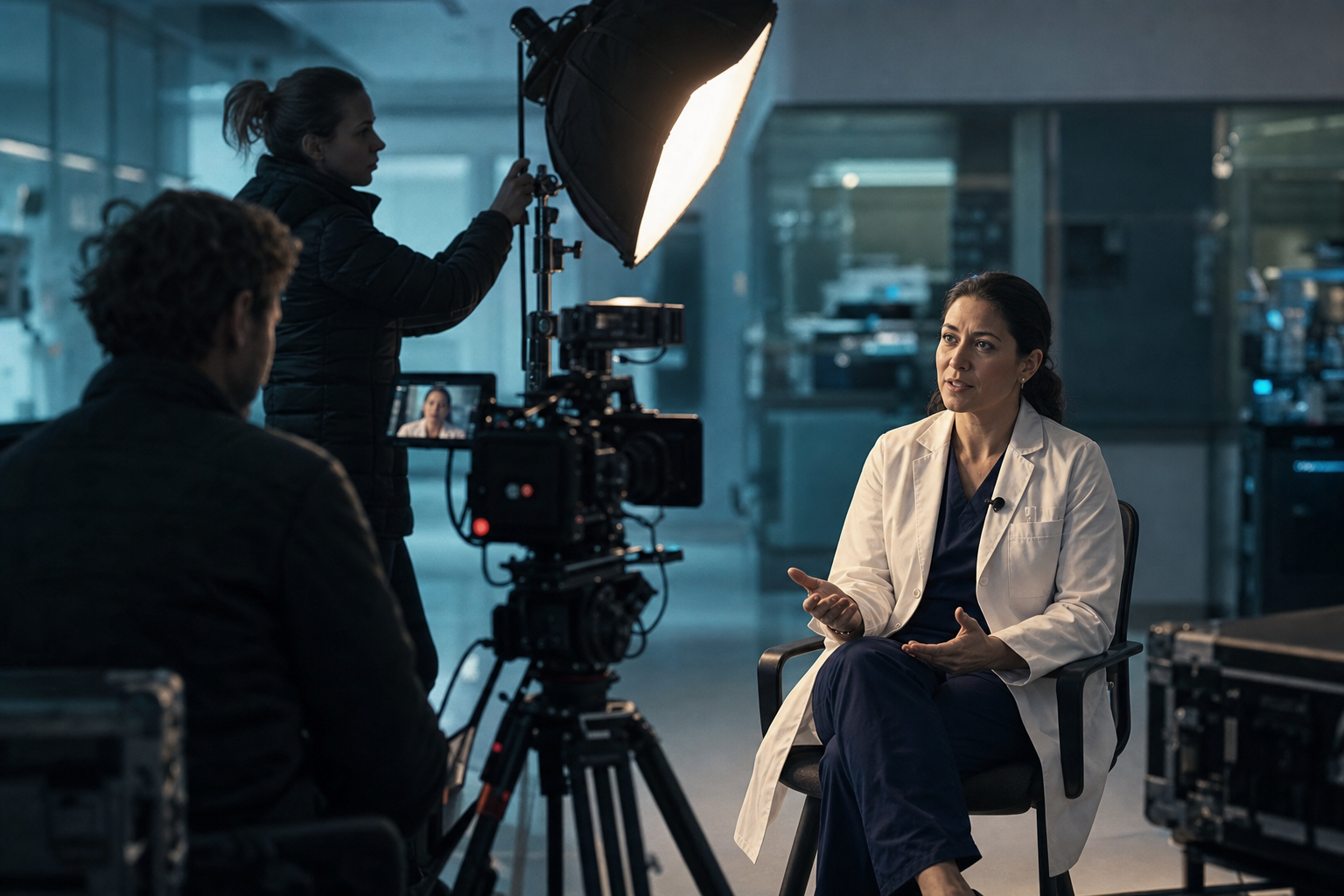
Video production requires an even longer runway. Conferences require credentialing approvals for production crews and equipment, and that process can take up to three months. A crew without approved credentials doesn't get on the floor and can be kicked out at any moment.
Geofencing Gives You a Conference Presence Without the Conference Cost
Exhibiting at major conferences is expensive. For companies with limited budgets, the temptation is to skip events they can't afford to sponsor and accept the visibility gap that comes with it.
Geofenced digital campaigns allow you to target physicians whose mobile devices enter the conference venue boundary, without having to sponsor a booth, a badge, or any physical presence at the event.
When NPI targeting is layered into that geofence, the audience narrows from everyone in the building to specific named providers filtered by specialty, procedure code, or diagnostic billing behavior.
The result is qualified ad delivery to the exact physicians your brand needs to reach, at the moment their attention is on your category. Every named provider who engages becomes part of a first-party data asset your team owns and can activate for retargeting, email outreach, or rep prioritization.
Showing Up Without a Delegation Plan
The single biggest operational mistake is underestimating how stretched a marketer already is on the day of the event. Booth coverage, presentations, rep coordination, networking, and hallway conversations with prospects and customers all compete for the same attention simultaneously.
Stacking video production on top — scheduling KOL interviews, managing clinician availability, directing content capture — creates conditions where everything gets done poorly because nothing gets done with full attention.
The marketers who execute well on the floor show up with responsibility already distributed. Production partners handle execution while the marketer focuses on relationship-building and strategic conversations that only they can have.
Video Belongs at the Destination, Not in the Ad
Display advertising and geofence campaigns get an HCP to click. What they find on the other side of that click determines whether the engagement goes anywhere.
Conference video — KOL interviews, product theater content, clinical SME commentary — isn't well-suited as an ad unit. It's well-suited as a landing page experience that deepens understanding once interest has already been established.
When a physician clicks through and finds a real clinician talking about how they use a product or what they've seen in their practice, it reads differently than a product sheet. It builds the kind of credibility that makes the follow-up conversation with a sales rep worth having.
The ad's job is to earn the click. The video's job is to make the click worth something.
Why Content Takes Longer Than Expected
The assumption that conference video will be published within days of the event is common and almost never accurate. Production turnover isn't the bottleneck. What takes time is everything that happens after the edit is done.
MLR reviews, stakeholder sign-offs, and courtesy review windows for clinicians who want to see their footage before it's published. These steps are real, they're time-consuming, and they can't be compressed by producing faster.
The only way to shorten the gap between shoot day and publish date is to build the approval process into the pre-conference timeline.
In an environment where HCPs encounter the same manufactured messaging repeatedly, a real conversation is what actually registers. Scripted content compounds the delay because it rarely delivers usable footage to begin with.
Handing a clinician a pre-approved script and expecting a polished, watchable performance sets up footage that reads exactly as staged as it was.
Conversational interview formats — where the subject speaks from their own experience rather than from a prompt — consistently produce content that holds up.
Q&A: Conference Marketing for HCP Brands
How far in advance should conference marketing planning actually start?
For digital campaigns, 30 to 45 days before the event is the target launch date — which means audience building and creative development need to begin before that. For video production, three months is the minimum to clear the credentialing approvals that get a crew on the floor.
Can geofencing work if we're not exhibiting at the conference?
Yes — NPI-layered geofence campaigns can run against the conference venue without any physical presence. The named provider data generated by those campaigns becomes a first-party asset your team owns for retargeting and outreach after the event.
Where does video fit in the conference marketing strategy?
At the post-click experience. Video is most effective on landing pages and product destinations where an HCP can go deeper. It isn't the right format for the ad unit itself, but it's highly effective at converting a click into an informed conversation.
Why does conference video content take longer than expected to publish?
The edit isn't what takes time. MLR approvals, stakeholder reviews, and clinician courtesy windows are the actual bottleneck. Planning the review process before the conference is the only reliable way to compress the time to publish.

While you're here
A few more pieces from the team on healthcare marketing, AI, and the work behind the work



Trusted by the teams shaping healthcare
Real perspectives from the healthcare and life science teams who've trusted DigiVidBio with their campaigns, their science, and their reputations.
Your story
starts here
Whether you have a clear brief or just a challenge worth solving, we're ready to dig in. Send us a note and we'll get back to you within one business day.