
Production Lab: On the Ground at AACR: How We Create Conference Video Content
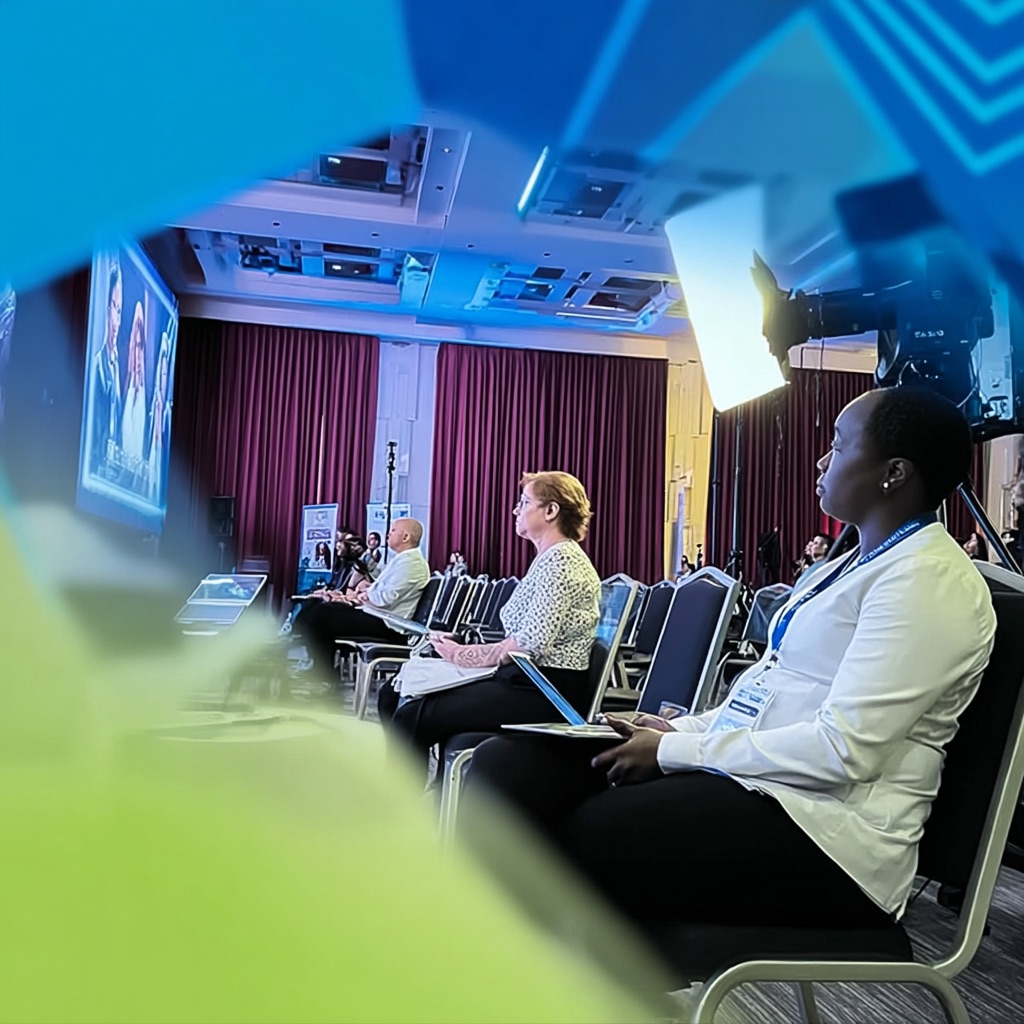
Conference video production either elevates your presence with HCPs or exposes how unprepared your brand is for the realities of the show floor. What looks like a simple “record the talk at our booth” request is actually a high-stakes logistics, equipment, and experience puzzle that directly impacts how your story lands with healthcare decision-makers.
What Really Happens Behind the Booth
On paper, conference filming sounds straightforward: send a crew, capture a few talks, cut a highlight reel. In practice, every event layer—rules, floor layout, AV policies, and timing—can either support or sabotage your investment.
Some conferences only allow filming inside your booth, which instantly changes how big that booth should be, how you lay it out, and where production can physically exist.
Approvals, badges, insurance, and security clearance are months-long checkpoints that must be cleared early if you want a crew on the floor at all.
By the time your presenter steps up, the groundwork (or lack of it) has already determined how usable that footage will be for marketing and sales.
Gear Choices That Respect the Environment
Walking a grip truck into an industry conference would be overkill, and completely impractical. The real expertise is knowing which tools to bring so you get broadcast-level results without turning your booth into a film set.
Experienced teams rely on compact cinema bodies like the Blackmagic Pocket Cinema Camera 6K Pro to deliver high-end image quality while staying nimble in crowded aisles and tight booths.
Longer lenses allow shooting from a distance, so cameras stay out of the way, preserving the experience for HCPs and attendees while delivering polished angles.
Lighting follows the same philosophy. Convention halls often look evenly lit to the naked eye, but overheads create harsh shadows, so compact, inflatable or magnet-mounted lights are used to add soft, non-intrusive illumination that makes presenters look better without becoming part of the spectacle.
The principle is straightforward: bring enough to solve for any realistic scenario, but design the kit so it disappears into the environment while serving its function.
Building Redundancy Into Audio and Logistics
Conference AV is never something a brand should trust blindly. Fees, restrictions, or technical issues can change on-site, and if your crew has not planned for independence, entire sessions can become unusable.
When a soundboard feed is available and practical, XLR runs give you clean, direct audio while keeping cameras free to move. When it is not—because of policy, cost, or access—wireless systems, lavalier mics, and discreet podium rigs ensure every presenter is still captured clearly without cluttering the scene.
The standard operating assumption is “off-grid capable”: the team expects to run its own audio, manage its own lighting, and survive with zero reliance on conference AV if needed.
Redundancy is not about paranoia; it is about protecting the client’s only chance to capture unrepeatable moments with clients and HCPs in the room.
Why Arrival Time and Flow Matter So Much
Those first minutes of a session are where context is established, energy is highest, and audiences are freshest. If the crew is scrambling in, the recording has already lost the most valuable moments and introduced visible disruption.
Arriving early protects the opening of the talk, gives the team time to scout the booth, confirm restrictions, and map out how cameras and crew will move. Once positions are locked, leaving cameras rigged between segments speeds transitions and reduces on-the-fly changes that stress presenters.
Thoughtful planning of backgrounds and sightlines ensures brand elements are visible without overwhelming the presenter or distracting the audience. This level of discipline is what keeps your presenter focused on content, not on the fact that there is a camera operator stepping over cables behind the podium.
Creating a Comfortable, Human Experience
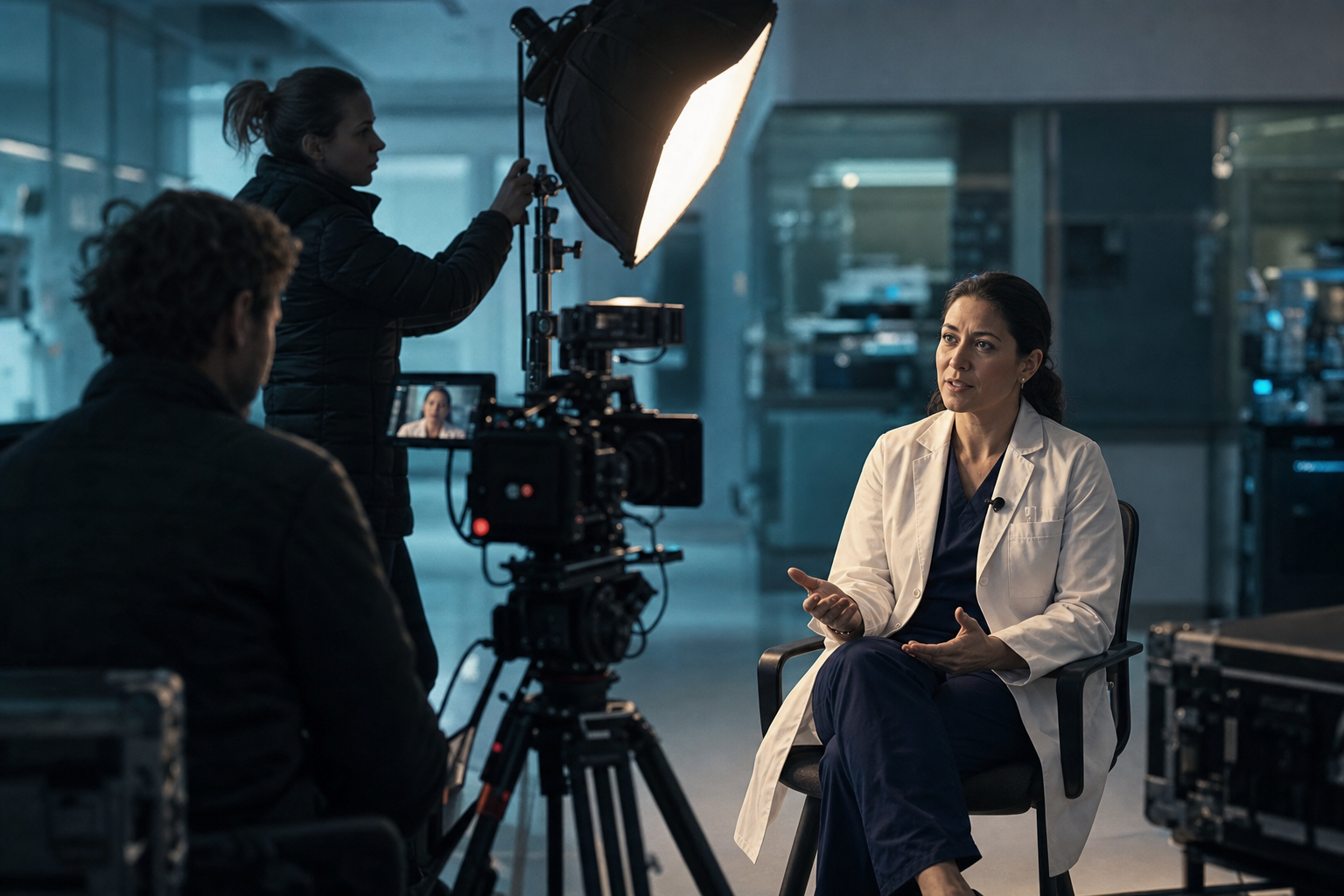
Being on camera is inherently vulnerable, especially for clinicians and commercial leaders who are used to live conversations, not lenses. The way video producers run the day show directly in the footage—either as stiffness and guarded delivery or as relaxed, confident storytelling.
A calm, consistent workflow helps talent feel like the production team is an extension of their internal organization, not a bolt-on vendor. When presenters feel seen, supported, and un-rushed, they speak more naturally, which makes downstream audiences more likely to trust and absorb the message.
Even small habits, like leaving the booth exactly as it was set up, closing the day with a proper thank you, and then stepping back to let the client breathe, help reinforce that respect.
In the final edit, that energy is visible. Moments feel lived-in rather than staged, and the authenticity that HCPs respond to most becomes the throughline.
If your team is planning to film at an industry conference, treat it as more than a line item: it is a high-leverage opportunity to capture real, in-field proof of how your brand shows up with clinicians.
Use this episode as your behind-the-scenes checklist to see how a disciplined, human-centered production approach turns hectic conference halls into durable, high-performing content for HCP marketing.
Conclusion: Turn Conference Chaos into Content Assets
Filming at AACR or any major medical conference is not a “point and shoot” task—it is a stress test of your logistics, your production partner, and ultimately your brand. When you align permits, gear, audio, timing, and talent experience behind a single, disciplined plan, you walk away with usable, on-label content that can work for HCP engagement long after the show floor closes.
For Bio, Medtech, and Life Science teams, this is one of the few moments where you have real clinicians, real conversations, and real reactions in one place. A production team that can operate “off-grid,” stay invisible in a booth, and keep your presenters calm will turn those high-pressure days into a repeatable content pipeline for sales, medical affairs, and omnichannel campaigns.
If you are planning to film at a conference, use this blog as your pre-flight checklist.
Q&A: How We Create Conference Video Content
Why does conference filming matter so much for HCP marketing?
Because it captures real clinicians, real conversations, and real reactions that you cannot easily recreate later, and those moments drive trust far more than studio-perfect spots.
What kind of gear setup works best in a booth?
Compact cinema bodies, longer lenses, and low-profile lights that deliver broadcast-level quality without turning your booth into a distraction for HCPs walking the floor.
How do you protect against bad audio on-site?
Assume you will not get usable conference AV, then add redundancy with lavs, wireless systems, and discreet podium mics so every talk is still clean and usable.
How do you keep presenters comfortable on camera?
Run a calm, predictable day, act like an extension of their team, and give them space and time so their delivery feels natural and authentic instead of over-produced.

While you're here
A few more pieces from the team on healthcare marketing, AI, and the work behind the work
.png)
.png)

Trusted by the teams shaping healthcare
Real perspectives from the healthcare and life science teams who've trusted DigiVidBio with their campaigns, their science, and their reputations.
Your story
starts here
Whether you have a clear brief or just a challenge worth solving, we're ready to dig in. Send us a note and we'll get back to you within one business day.