
Production Lab: How to Film Inside a Life Science Lab Without Disrupting It

Your lab is one of the most compelling visual assets your brand has, and one of the most difficult environments to film in.
The combination of regulatory obligations, active operations, sensitive patient data, and uncontrollable ambient noise makes lab production a discipline of its own. Getting it right requires a production approach built specifically for the environment.
For biotech, diagnostics, and life science companies investing in video, understanding what that looks like before engaging a production partner can mean the difference between footage that builds HCP credibility and footage that sits unused because it doesn't clear compliance review.
The Visual Opportunity Is Real — So Is the Complexity
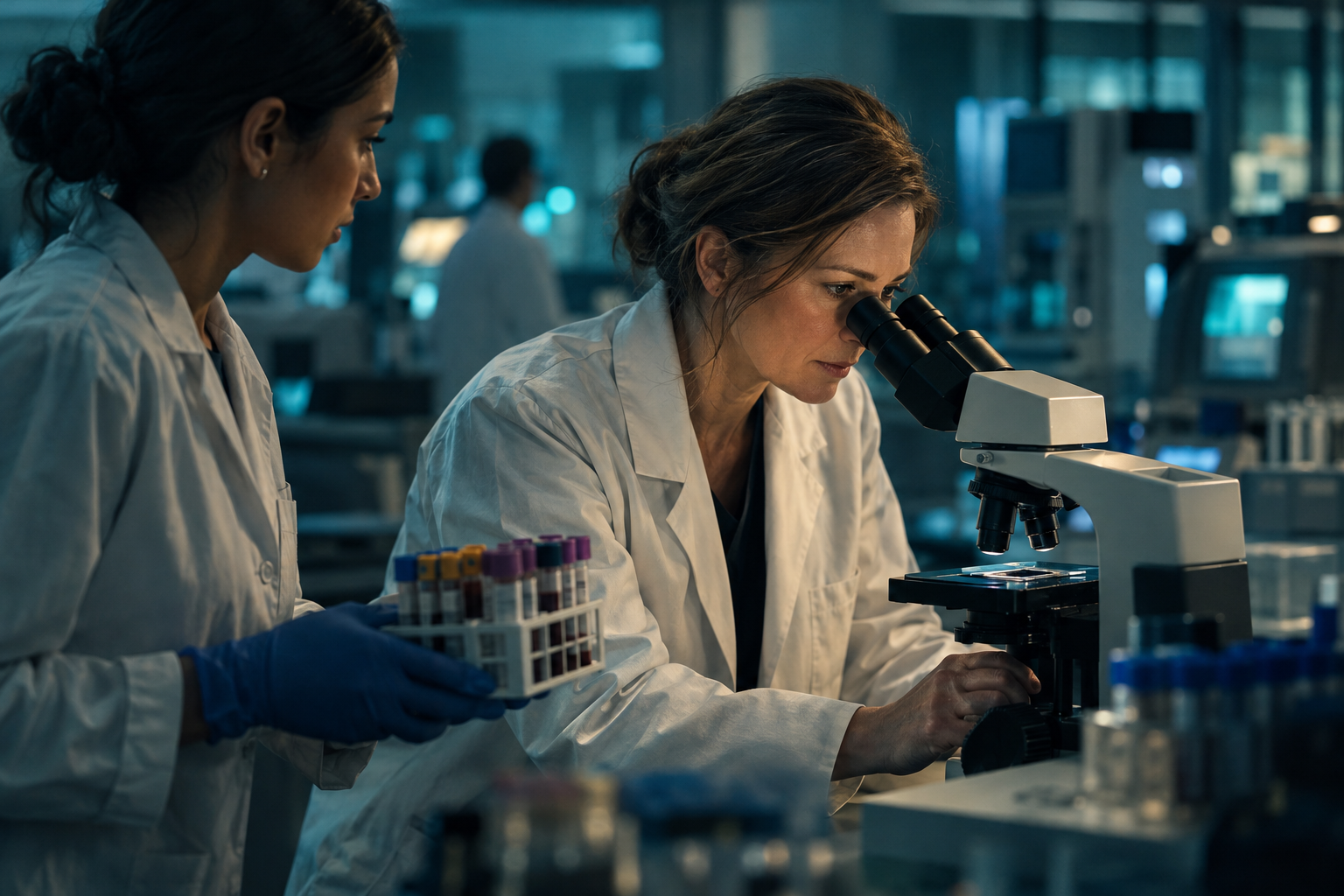
Labs are visually rich in ways that resonate with clinical audiences. The equipment is specialized, the processes are sophisticated, and the environment signals exactly the kind of precision and innovation HCPs want to see from a company they're considering trusting.
Most people watching your marketing content have never been inside a facility. What makes lab filming genuinely difficult is that the space was designed for science, not cameras.
Hard floors, reflective surfaces, glass partitions, and industrial ventilation systems create persistent acoustic challenges that don't exist in a conference room or studio. Bench rows, tight aisles, and equipment placed for function over aesthetics all constrain where cameras can go and how interviews can be framed.
Pre-Production Determines What You Capture
The production decisions that shape lab footage are made weeks before anyone arrives with a camera.
Every lab has an operational rhythm. Deliveries arrive on specific days and create temporary disorder. Sample intake, processing, and pathologist review happen in sequence across a day. If the goal is to show a complete workflow on camera, that workflow has to be mapped and scheduled around — not discovered on the shoot day.
When a procedural video requires capturing a multi-step process where certain steps have hours of wait time between them, a well-designed production schedule stages different batches at different points, so the crew can move through the sequence without downtime or overtime.
Scouting the space in person, rather than relying on photos, matters more in a lab than in almost any other environment. A walkthrough reveals what the ventilation system sounds like, where the acoustic pressure points are, which sections of the lab will have foot traffic during filming, and whether the intended interview location is next to a fume hood running at full draw.
Audio Is the Hardest Technical Problem in Lab Production
Labs are built to be cleanable, not acoustically neutral. The absence of carpet, soft furnishings, and sound-absorbing materials means sound bounces. Ventilation systems, fume hoods, HVAC filtration, and exhaust fans run continuously. Safety regulations require it. A production team that asks a client to shut down air handling for audio recording is demonstrating that it doesn't understand the environment.
Multiple microphone types — lavaliers on each subject, a directional boom mic, and a dedicated backup for multi-person setups — give the edit team options regardless of what the room produces. Strategic placement, like positioning talent on rubber-backed mats to reduce floor reflection and orienting directional mics away from ventilation sources, reduces ambient intrusion before it reaches the recording.
Setting accurate expectations about what ambient noise will sound like on set, and what it will sound like after processing, is part of professional production. Most clients find the issue far less noticeable than anticipated upon delivery.
Compliance Shapes Every Shot
The compliance requirements that govern what appears on screen in a clinical or diagnostic environment go beyond avoiding obvious patient information. They extend to PPE, lab safety protocols, and intellectual property in the frame.
If a process must be performed under a fume hood, it must be shown being performed under a fume hood. If an N95 is required in a given area, everyone visible in that footage needs to be wearing one. A shot can be technically excellent and still be unusable if it doesn't reflect proper safety protocol, because the client's CLIA certification or BSL rating could be put at risk by publishing it.
Patient data on screens is a frequent challenge in pathology and diagnostics labs. Real patient names and identifiers appear on monitors that would otherwise make for strong visual storytelling. The same problem-solving applies to proprietary equipment labels or branding that shouldn't appear in publicly distributed content.
When certain staff prefer not to be filmed, or when the ideal subject isn't available on shoot day, hands-only shots, properly PPE-equipped stand-ins, and controlled background staging all preserve the visual authenticity of a working lab without requiring specific individuals to be on camera.
Think your lab footage is compliant? Watch how we work through it on set.
https://www.youtube.com/watch?v=R2eHpJGmy7M
What a Production Team Should Look Like in Your Lab
The right production team for a lab shoot operates as a collaborative extension of your organization. That means arriving with a clear shot list built from your workflow, adapting that list as the interview surfaces new priorities, and treating the lab's operational continuity as a shared responsibility.
It also means being willing to do the unglamorous work, like repositioning equipment to clean a frame, solving for lighting that's built into the building's emergency system, flagging an IP label that would create a problem in distribution. A producer on set whose attention is on the full frame catches compliance issues before they become edit problems.
The measure of a good lab shoot isn't whether everything went according to plan. It's whether the team had the experience to anticipate what wouldn't, and the preparation to handle it without stopping your lab in the process.
Q&A: Filming in Life Science Labs
Why does lab size matter for video production?
A large facility could have drone coverage to convey scale; a smaller lab needs tighter framing to read as purposeful. Both require knowing what you're walking into.
How do production teams handle ventilation noise in labs?
Fume hoods and HVAC systems aren't going off, so the approach is layered mic redundancy on the front end and AI-assisted noise reduction, de-hum, and EQ in post.
What compliance issues most commonly affect usable lab footage?
PPE is the most frequent. If someone visible isn't wearing what the protocol requires, the shot can't be used. Patient data on screens, proprietary equipment labels, and missing image releases are close behind.
What if key lab staff don't want to be on camera?
Hands-only shots — pipetting, staining, loading samples — convey authentic lab activity without showing identifiable individuals.
How should scheduling around lab operations work?
The shoot schedule maps to the lab's workflow. Delivery days, processing sequences, and wait times between steps all need to be understood in pre-production so the lab keeps running and the crew captures everything it needs.

While you're here
A few more pieces from the team on healthcare marketing, AI, and the work behind the work

Trusted by the teams shaping healthcare
Real perspectives from the healthcare and life science teams who've trusted DigiVidBio with their campaigns, their science, and their reputations.
Your story
starts here
Whether you have a clear brief or just a challenge worth solving, we're ready to dig in. Send us a note and we'll get back to you within one business day.